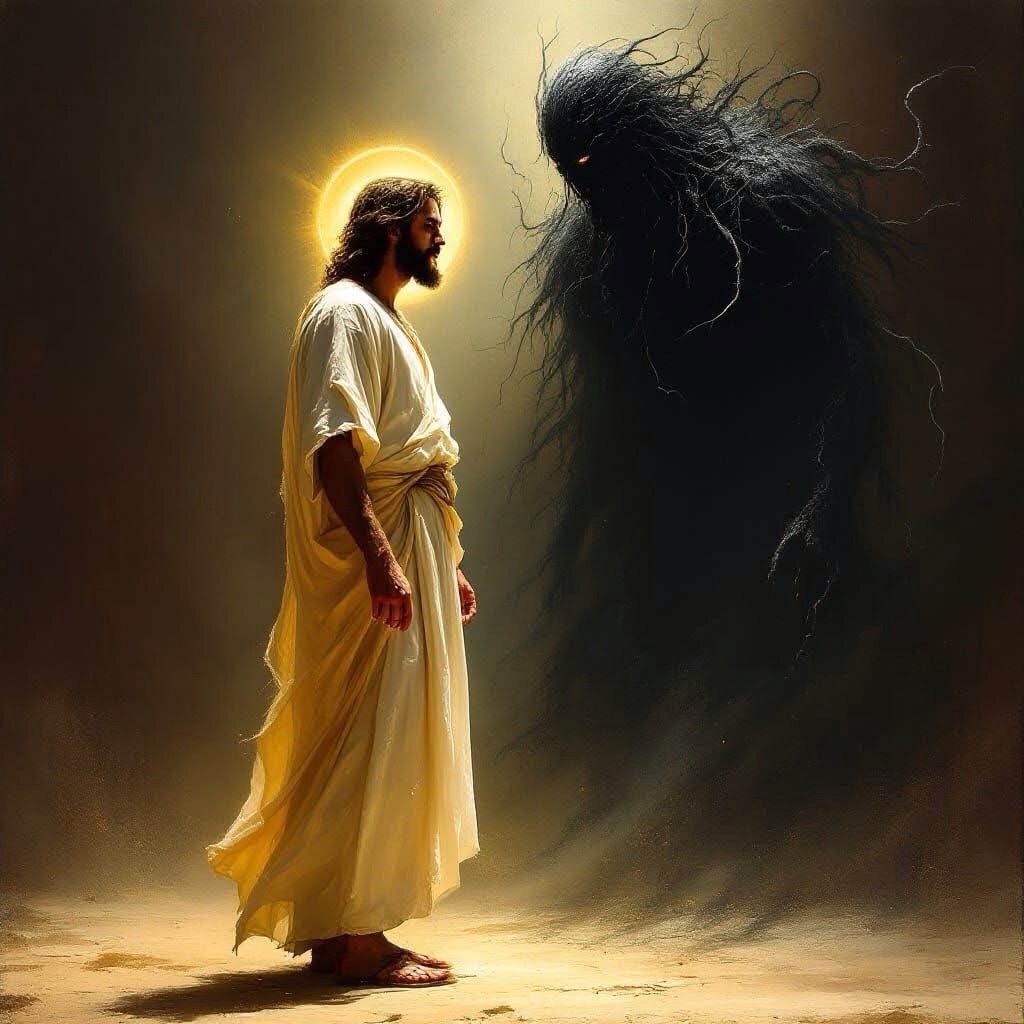
Unrecognized Gnostic novels revealing hidden spiritual influence as a religious comparison to Biblical and Gnostic scripture and accepted methods of self-control in psychology.
It might seem unusual to connect classic horror novels with biblical and Gnostic ideas, plus adding in modern psychology. Yet, I invite you to join me in a casual exploration of how Dr. Jekyll & Mr. Hyde, Dracula, and Frankenstein shed light on hidden mental or spiritual powers. Each story shows how spirits of the dead, buried impulses, or parasitic forces can overcome a person’s will, making them act in ways they wouldn’t choose if they were fully aware of what was going on inside. These ideas resonate with Ephesians 6:12, Mary 8:10-22, Thomas 4, Thomas 56, Matthew 15:11, Matthew 16:24, Isaiah 40:31, and Carl Jung’s insights on the shadow and individuation. They also echo older mystical traditions such as alchemy, Zoroastrianism, and Hermeticism, which influenced Essene practices, providing a backdrop for Gnostic scripture.
These aspects are important for your pathway to acheive Gnosis and to definitively “Know Thyself.”
~~
Jungian Psychology, the Shadow, Individuation, and CBT (plus Marie-Louise von Franz)
Before we dive into the tales themselves, let’s consider what Dr. Carl Jung and his colleague Dr. Marie-Louise von Franz bring to our understanding of these overshadowing forces. Dr. Jung’s shadow concept holds that unrecognized drives can behave like autonomous entities, Hyde, Dracula, or Frankenstein’s multi-dead being, if we fail to acknowledge them. Dr. Jung’s process of individuation requires bringing these impulses into consciousness, paralleling Gnostic teachings about “finding the corpse.” Although Cognitive Behavioral Therapy (CBT) doesn’t speak of “spirits,” it offers a similar method: label harmful thoughts as an “other” and deny them. Both align with biblical and Gnostic commands to face overshadowing urges daily.
Dr. Marie-Louise von Franz, a major student of Jung, and a world renowned psychologist in her own right, expands on how evil or shadowy figures in fairy tales (and, by extension, horror stories) represent the unowned darkness within the protagonist. In Shadow and Evil in Fairy Tales, von Franz clarifies that ignoring or excluding these aspects allows them to gain monstrous power, paralleling Lucy’s downfall to Dracula, Jekyll’s transformation into Hyde, or Victor’s creation of a multi-“dead men” monster. The overarching biblical, Gnostic, and CBT parallels all insist that once recognized, these “dark presences” can be challenged and defused. Waking up to such “dark attachments” is challenging, as one must distinguish one’s true, silent mind from every “other” intrusive thought.
My Dear Reader, If you had not read my prior articles, let’s quickly take a brief look at our three tales.
Dr. Jekyll & Mr. Hyde
Robert Louis Stevenson’s 1886 novella, Strange Case of Dr. Jekyll and Mr. Hyde, centers on Dr. Henry Jekyll, a respected London doctor who hopes to purge his immoral urges by condensing them into a separate persona named Mr. Edward Hyde. In Chapter 2 (“Search for Mr. Hyde”), we see Hyde’s sinister demeanor, and by Chapter 4 (“The Carew Murder Case”), Hyde murders Sir Danvers Carew. In Chapter 10, Jekyll admits Hyde gains strength each time he indulges repressed desires. Notice the pun: “Hyde” is something hiding inside Jekyll—a repressed shadow.
Viewed Gnostically, Hyde becomes the “corpse” (Thomas 56) Jekyll wants to discard rather than confront. Ephesians 6:12 reflects Jekyll’s real battle with intangible dark impulses, not just external enemies. If Jekyll had used an integrative approach, perhaps like how CBT teaches one to recognize and challenge destructive thoughts, then Hyde might never have fully taken over. But by trying to banish his darkness, Jekyll ironically gave it its own life.
~~
Dracula
Bram Stoker’s Dracula (1897) offers us Count Dracula, an undead noble who thrives on blood and captivates minds through uncanny skills. Jonathan Harker, in Chapters 1–4, finds he is trapped in Castle Dracula (symbolic of a mental entrapment), while Lucy Westenra’s Chapters 5–13 depict her transformation from an ordinary woman into a vampire, enslaved by Dracula’s will. She doesn’t see the infiltration early on, drifting into a trance that ends in her becoming undead (the fate for those who do not awaken to the influence of the dead).
Here, Thomas 4, where an older spirit overtakes a younger mind, fits well because Dracula, centuries old, subjugates Lucy’s soul like a master overshadowing his host. Had she caught this change in her psyche (similar to CBT spotting negative impulses), Lucy might have fought him. Mary 8:10-22 shows Jesus defeating Desire, an overshadowing spirit that Lucy fails to overcome. Tragically, Lucy’s inability to conquer these influences means that in death she becomes a mind-infiltrating vampire, repeating Dracula’s overshadowing cycle for those who remain unaware of such undead or spiritual forces.
~~
Frankenstein
Mary Shelley’s Frankenstein; or, The Modern Prometheus (1818) focuses on Victor Frankenstein, who assembles body parts from several dead men and animates them into one Creature. Shelley crafted the Frankenstein monster to illustrate how many dead men’s spirits can be discovered in a single “awakened mind,” terrifying not just the public but also a creator who denies his moral responsibility. This matches the Gnostic principle of ignoring overshadowing energies at great risk: had Victor accepted accountability—akin to CBT’s advice to own all one’s impulses—he might have forestalled the Creature’s revenge. Instead, he disowns them, intensifying their hold.
In Chapter 5, Victor flees upon seeing the Creature’s “dull yellow eye,” horrified by his own handiwork. By Chapter 10, the Creature calls itself a “fallen angel,” furious at its rejection, demonstrating how these multiple “dead men” overshadow Victor’s conscience.
~~
Ephesians 6:12, More Than a Physical Battle
Ephesians 6:12 says,
“For we do not wrestle against flesh and blood, but against…the cosmic powers over this present darkness…”
Though many read it as describing external demonic forces, these novels highlight inward or intangible struggles. Hyde arises from Jekyll’s neglected impulses, Dracula manipulates Lucy’s mind, and Frankenstein’s Monster is a gathering of “dead men” overshadowing Victor. Gnostics might call them archonic presences, while modern psychology would see them as repressed urges or unconscious complexes. Either way, Ephesians 6:12 points us to the fact that the real fight often rages beneath the surface.
This connects us to
Jesus’s 40 Days in the Desert (Matthew 4:1–11): Another Model for Overcoming “Mr. Hyde”
Before we connect Jesus’s desert test with Hyde, let’s recall Matthew 4:1–11, where Jesus fasts in the wilderness for 40 days, directly confronting the devil’s temptations. This desert ordeal showcases Jesus up against a hidden or overshadowing presence that offers worldly gains if He yields. Think of Jekyll’s hidden darkness, Lucy’s infiltration by Dracula, or Victor’s multi-spirited creation—each overshadowing power tempts its host to surrender. Jesus, however, recognizes and denies every temptation, exemplifying the Gnostic directive to “find and refuse the corpse” or CBT’s practice of catching harmful thoughts and saying no.
In that sense, Jesus’s 40-day spiritual battle parallels the everyday conflicts we have with these hidden forces. If Jekyll, Lucy, or Victor had applied a fraction of Jesus’s method—immediate refusal and unwavering clarity—they might have avoided the disastrous arcs we see unfold.
~~
Jesus’s Mr. Hyde in Mary 8:10-22, Confronting Desire and the Living Resurrection
In the Gospel of Mary, chapter 8 (verses 10–22), we meet Desire, a spirit that not only trailed Jesus before He noticed it, but boldly claimed it saw Him ascend—the living resurrection described in the Gospel of Philip. Desire says, “I served you as a garment, and you wore me. And you did not know it.” (Desire was hiding, like a personal “Mr. Hyde.”) Eventually, Jesus conquers Desire, declaring that the ignorance which supported it is gone. Also, Desire is the Devil Jesus was fighting with mentally in Matthew 4. Furthmore, evidence suggest Desire did witness Jesus’s ascension/resurrection showing these overshadowing impulses can linger until fully defeated, but the comment also identifies that Jesus was alive for the resurrection – “I saw you ascend” (a concept presented in the Gospel of Philip that the resurrection must occur while one is alive, and not 3 days after death).
~~
Matthew 15:11 and 16:24 – Jesus’s Own Experience With Influences on Mind and Action – Was He Really Trying to Warn Us??
Matthew 15:11 (“It is not what goes into the mouth that defiles a person, but what comes out…”) and Matthew 16:24 (“If anyone wants to come after me, let them deny themselves…”) reveal that Jesus, from His own experience, recognized how the mind could be tempted and how these influences could shape both speech and behavior. Along with His desert confrontation in Matthew 4:1–11, these verses show Jesus understood the internal nature of corruption and the need to deny overshadowing urges. He knew, from personal experience, that unseen forces (the devil or Desire) can push us toward words and actions that do not reflect a pure mind and spirit—exactly what we see in Lucy succumbing to Dracula, Jekyll unleashing Hyde, or Victor summoning multiple dead men’s wills.
Lucy, Jekyll, and Victor each confront an overshadowing power—Dracula, Hyde, or “several dead men”—but don’t manage Jesus’s feat of naming and driving them out. Mary 5:8-9 implies Mary saw Jesus in an angelic state “that day,” underscoring how Gnostics believe He resurrected in His lifetime, not just after death. The crucial difference is that Jesus overcame the overshadowing power, whereas our Gothic protagonists did not.
~~
Thomas 4, The Older Spirit That Pushes the Child Aside
Thomas 4 (from the Lambdin translation) reads:
“Jesus said, ‘The man old in days will not hesitate to ask a small child seven days old about the place of life, and that person will live. For many who are first will become last, and they will become a single one.’”
Gnostically, it warns that a more advanced or sly presence, similar in concept to Dracula, who is dead (or centuries old), or the suppressed impetus behind Hyde, or the multiple dead men forming Frankenstein’s monster, can outmaneuver a naive soul, especially if they have been a shared aspect of the unsuspecting person’s entire life. This is normal thought to them. They dont know any difference. It hints that these dark attachments can blend with a newborn child, meaning a person may unknowingly live under them for a long time (as Jesus Himself may have battled Desire/the devil for a prolonged period). Like Lucy’s or Jekyll’s “child” self, or Victor’s moral sense, that naive part ends up last if the older presence remains unseen.
~~
Thomas 56, Discovering the “Corpse”
Thomas 56 says,
“Whoever has come to know the world has discovered a corpse, and whoever has discovered a corpse, of that person the world is not worthy.”
This “corpse,” from a Gnostic viewpoint, signifies a dead or undead presence shaping our decisions without permission. Jekyll tries to cast off his “Hyde-corpse,” Lucy never identifies the undead infiltration of Dracula, and Victor disowns the resurrected “several men” in his monster. Thomas 56 indicates that finding this corpse robs it of power; ignoring it gives it free rein, dooming Lucy, Jekyll, and Victor.
The part about the world is not worthy means that only those who discover this truth within themselves will be the Chosen few for salvation by experiencing the resurrection while they still live if they can defeat the mental struggles against the spiritual influences.
~~
Isaiah 40:31, The Angelic Twin and the Wings of an Eagle
Isaiah 40:31 proclaims,
“They who wait for the Lord shall renew their strength…they shall mount up with wings like eagles…”
Typically read as poetic encouragement, Gnostics also see it as revealing that persevering against overshadowing powers helps us meet our angelic twin, since angels are portrayed with eagle wings in biblical tradition. The Gospel of Philip calls Jesus an angel, referring to His living resurrection. Ephesians 6:10-18 details the armor that twin wears once intangible foes—like Dracula, Hyde, or the multi-“dead men” in Frankenstein—are bested. From personal battle against overshadowing “Draculas,” “Hydes,” and cunning “Desires,” I concluded Isaiah’s words point to a higher vantage we gain after we master these hidden forces.
Ephesians 6:10-18, The Mentality and the Angelic Twin’s Adornments
Now, Ephesians 6:10-18 is both the mentality one must hold onto in awakening to these mental-influencing entities, and the vision of what one’s angelic twin (an archangelic version of oneself) would be wearing if they ultimately conquer all sinful influences and impure desires, emerging supremely righteous and pious. This synergy of inner resolve and outer transformation ties in seamlessly with Jesus’s own journey: He overcame the devil in Matthew 4:1–11, refused overshadowing impulses in Mary 8:10-22, and showed us a path of daily denial of corrupting forces (Matthew 16:24). To glimpse the “armor of God” on our angelic self is to realize we’ve won the spiritual war within, as Isaiah 40:31 promised, that if we remain vigilant in our efforts, we shall find our angelic twin by being given the wings of an eagle.
The Test of Every Person, A Living Resurrection
My dear reader, these novels beg the question: Are we ignoring our personal Dracula, hidden Hyde, or influential spirits? If so, they can secretly direct us, prompting us to say “the devil made me do it.” But Scripture, Gnostic wisdom, Jung’s shadow theory, von Franz’s perspective, and CBT all counsel that we must uncover and deny these lurking forces, or at the very least, under the psychological perspective, to actively resist thoughts and urges that we know are not inherently good or righteous. These thoughts can be very influential, and thus, an even stronger amount of willpower to resist them is an absolute must.
Thomas 4: An older spirit can overshadow a younger mind from birth, hinting at a lifelong hidden battle.
Thomas 56: Spotting the “corpse” frees us from its illusions. This is recognition of the spoken thoughts in our minds and refusing to obey them as noted in CBT.
Ephesians 6:12: Reveals the true enemies are hidden cosmic powers. (Spirits)
Matthew 15:11 and 16:24: Show Jesus’s personal grasp of temptation in mind and action—He instructs us to deny these forces, carrying the cross of the burden of the mental struggle one must endure to ascend like Him.
Matthew 4:1–11: Jesus’s own 40-day desert experience, where He resists the devil’s temptations one by one, modeling immediate rejection of overshadowing impulses.
In conjunction with
Mary 8:10-22: Jesus grapples with Desire, whom he clearly identified as being a spirit who, by the name he was given, is a play on words implying the influences of sin that Desire was trying to experience through Jesus. Desire (the Devil for Jesus in his 40 days in the desert) was His “Mr. Hyde” (hiding) which also proclaims it saw His ascension (evidence of the living resurrection).
Isaiah 40:31: Encourages us that perseverance leads to eagle-winged ascent, meeting our angelic twin, by having patience in God during this time of self purification using CBT and self-denial methods.
This correlates to the mental approach
Ephesians 6:10-18: which frames the mindset we need for “waking up” to overshadowing entities and, upon victory, depicts the archangelic armor that our twin self wears—righteous and pious beyond every sinful pull. Again, the archangelic twin of the living resurrection.
~~
Lucy’s failure to keep Dracula out dooms her to become a vampiric influencer, perpetuating overshadowing for others. Jekyll’s refusal to unify his shadow lets Hyde reign free, and Victor’s avoidance of moral duty for resurrected men’s spirits cedes power to the Monster. Alternatively, the Bible, Gnostic teachings, Jung, von Franz, and CBT converge on one daily practice: identify these impulses, deny them, and emulate Jesus’s desert triumph. This leads to a living resurrection—an authentic metamorphosis in which we find ourselves arrayed in Ephesians 6’s armor, fulfilling Isaiah’s eagle-wing prophecy here and now.
So, let’s muster the conviction to face our “Draculas,” “Hydes,” and multi-“dead men,” armed with spiritual discernment, Gnostic insight, the psychological lenses of Jung and von Franz, and CBT’s actionable tools. Thus, we leave “the devil made me do it” behind, & follow Jesus in overcoming hidden dark influences, & embrace our living resurrection—clothed in the angelic armor of Ephesians 6, ascending on eagle’s wings in this present life – a truth I have personally experienced in my own struggles and attainment of Gnosis.
Dear Reader, miracles are possible for those with the strongest willpower to resist Desire lurking within their own mind, but you must have unwavering faith in God.
For those who have ears to hear, then let them hear!
Bishop Jody Bédard
The Gnostic Union
The Gnostic Union Seminary
Copyright © 2025 by Jody Bédard. All rights reserved.
Email: bishopjodybedard@gmail.com
 Apostolic Pentecostal Network
You must be logged in to post a comment.