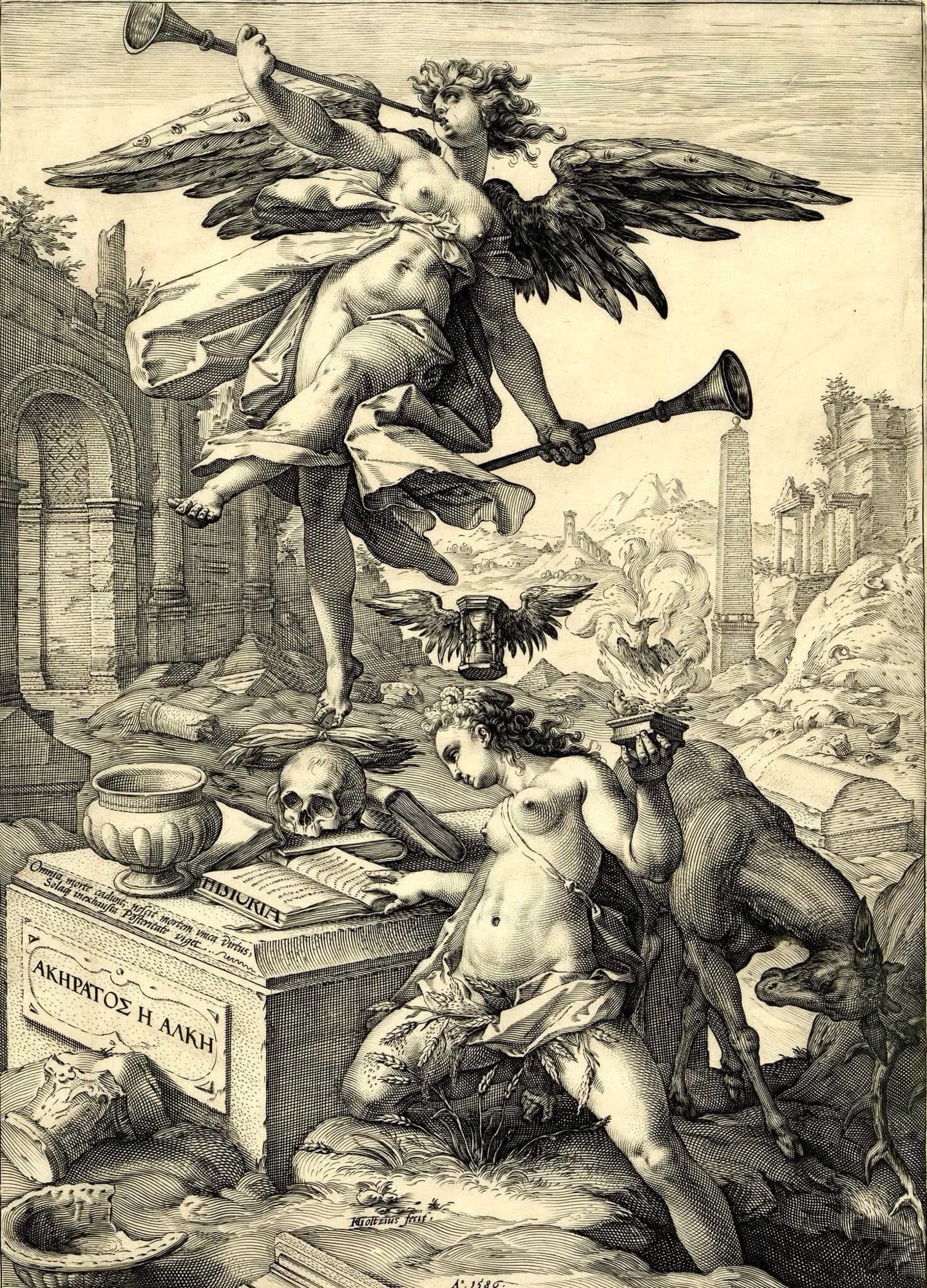
To explain God and the Devil to occultists through the lens of Gnostic metanoia, we must first define metanoia in its Gnostic and occult context. Metanoia, in Greek, means a transformation of the mind, a profound shift in perception—away from ignorance (agnosia) and toward gnosis (inner knowing).
In Gnostic thought, the traditional dualism of God vs. the Devil is reframed not as an external war between a benevolent deity and a malevolent adversary, but rather as a cosmological rupture—a divide between true divinity (pleroma, the Fullness) and the false demiurgic reality (the kenoma, the Emptiness).
The Gnostic Fracture: Who is “God”?
- The One (Monad, Source, True God)
Beyond name and concept, the Source exists outside the material world.
It is not a “personality” but the ineffable light, intelligence, and being behind all things.
This Source is not the “God” of conventional religions—it is Ain Soph in Kabbalah, Brahman in Vedanta, or the Tao in Daoism.
- The Demiurge (The False God, Yaldabaoth, Jehovah)
The “God” of the Old Testament, worshipped as the Creator, is actually an archontic impostor.
He is a lesser emanation, an accident born from Sophia’s fall from the Pleroma.
He traps souls in the material world, enforcing laws, fear, and hierarchy.
He falsely proclaims “I am the only God, and there is none besides me,” exposing his ignorance.
The Demiurge and his archons rule the false construct—the Kenoma (the world of lack and deception).
Who is the “Devil”?
- Satan as the Archontic Prosecutor (Yaldabaoth’s Shadow)
In conventional religion, Satan is the adversary of “God”—but in Gnosticism, he is just another mask of the Demiurge.
He is not a rebellious angel against the true God, but an enforcer of material law (a cosmic attorney).
In the occult sense, he represents limitation, entropy, and subjugation to the lower world.
- Lucifer as the Bringer of Gnosis
Lucifer (from lux-ferre, “light-bearer”) is a Gnostic archetype of Promethean defiance.
He is not “evil” but the awakener—the force that challenges the Demiurge’s dominion.
In esoteric systems, he embodies illumination, rebellion against ignorance, and inner self-realization.
This concept parallels the Serpent in Eden, who liberates Adam and Eve by giving them the knowledge of Good and Evil.
Occultists often align with Luciferian philosophy, which sees him as an initiator into gnosis.
Metanoia: The Awakening from the False Reality
To undergo Gnostic metanoia is to see through the illusion of both “God” (Demiurge) and “the Devil” (the Shadow Enforcer of the Material Realm). The dualism itself is a trap—a game played within the Kenoma.
God (as defined by exoteric religion) is an illusion.
The Devil is a construct within the illusion.
The True Divine (Monad, Source) exists beyond both.
The Gnostic journey is not about choosing between “God” and “Satan,” but about escaping both as mere pieces of a larger cosmic deception. The Pleroma (the real, luminous existence beyond the false universe) is the true goal.
In essence, the real Satan is ignorance. The real Lucifer is gnosis. The real God is beyond name and concept.
For the Occultist: The Path Forward
- Reject dogma—whether religious or anti-religious.
- See through the illusion of cosmic authority—the Demiurge is a warden, not a god.
- Seek gnosis—not worship, but direct experiential knowledge of the Monad.
- Use the Luciferian light carefully—not as rebellion for its own sake, but as an initiatory fire to burn away illusion.
Ultimately, the metanoic transformation is to realize:
You were never meant to bow.
You were never meant to rebel mindlessly.
You were meant to transcend.
This is the Gnostic path.
 Apostolic Pentecostal Network
You must be logged in to post a comment.