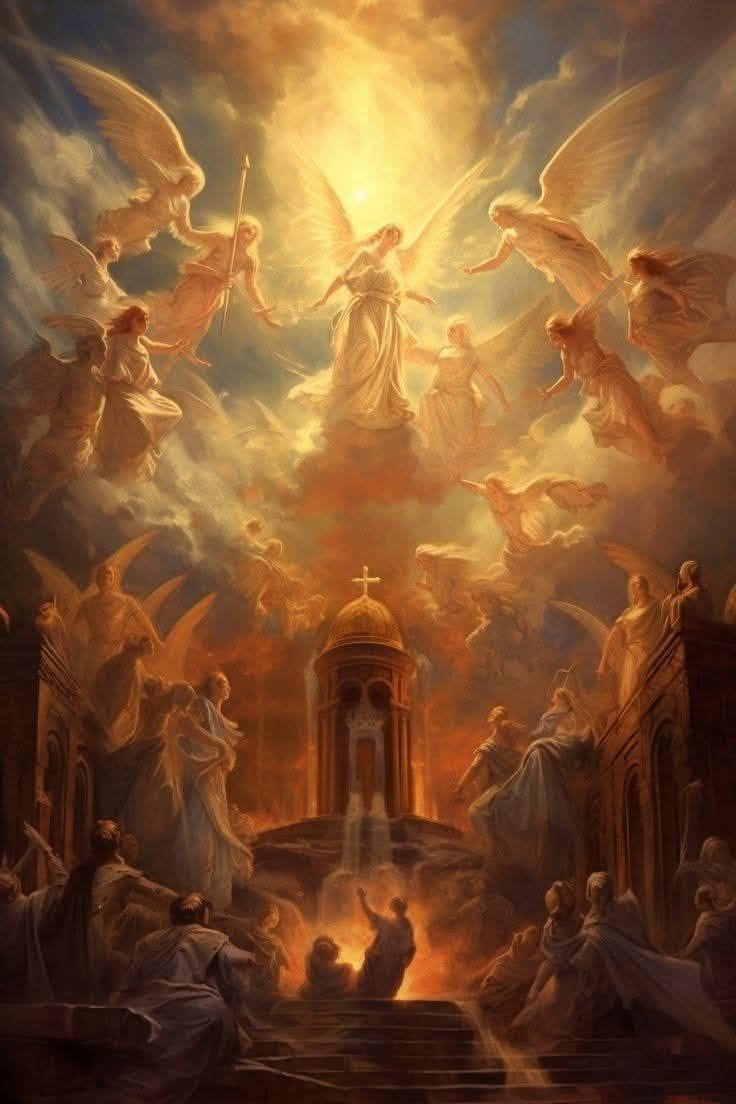
The Kabbalah is a Jewish system of magical philosophy and spiritual practice which syncretised components of Gnosticism, Neo-Platonism, and early Jewish mysticism (Merkavah mysticism) with aspects of ancient Sumerian and Egyptian cosmologies.
These diverse sources all came together in tenth-fourteenth century Europe, although their origins were considerably older. Due to its early oral origins, the first appearance of the Kabbalah cannot be specifically dated.
Considering the word Kabbalah means ‘received wisdom’, this oral beginning is entirely appropriate. The Sepher Yetzirah (Book of Formation), one of the key texts on which Kabbalistic philosophy is based, is usually regarded as being dated to the second-third century CE.
However, the first known written reference to the ten Sephiroth, which are key to the Kabbalah, has been dated to around 70 CE in the early Haggigah material which contributed to the Talmud (Rabbinical religious, legal and ethical lore), where some of the Sephirothic names were recorded:
“Ten agencies through which God created the world, vis, wisdom, insight, cognition, strength, power, inexorableness, justice, right, lore, mercy.”
It is interesting to see that the first of the names mentioned is wisdom, hinting at the pre-eminence of wisdom (and hence the Shekinah) even at this time.
Although the Kabbalah as a named system would not emerge for many centuries after the Haggigah, its development can be seen as expressing the manifestation of the wisdom of the Shekinah.
The philosophies and practices of the original Jewish Kabbalah, including the Shekinah, have blown like seeds and blossomed in a wide range of magical and spiritual traditions.
Thus some of the concepts and symbols of the Shekinah and the Kabbalah may be found in alchemy, Hermeticism, mystical Christianity, Freemasonry, Rosicrucianism, the grimoires, modern Pagan traditions and all their many derivatives, as well as the traditions of the magical Qabalah and Christian Cabalah which derived from the Kabbalah.
The study and practise of the Qabalah has largely become focused around the glyph known as Otz Chiim – the ‘Tree of Life’.
The image of the Qabalistic Tree of Life comprises the ten Sephiroth (‘emanations’), represented by circles, which are connected by twenty-two horizontal, vertical and diagonal paths. This glyph connects ten, (the number base used by most cultures), with twenty-two, the number of letters in the Hebrew alphabet.
The twenty-two also combines the three elements (air, fire and water, without earth which is taken as implicit), the seven classical planets, and the twelve zodiacal signs.
The Qabalah is largely based around the process of manifestation and realisation. Manifestation occurs down the Tree of Life, from the most subtle and intangible forces of the pure divine energy to the physical realm.
Realisation occurs up the Tree of Life, with insights gained through the unification of the self by journeying towards the divine source.
The Shekinah is present at both ends of the Tree of Life, and is inherent to both processes. She is not only the divine wisdom and source of souls which engenders and inspires, but also the tangible presence of the anima mundi.
 Apostolic Pentecostal Network
You must be logged in to post a comment.