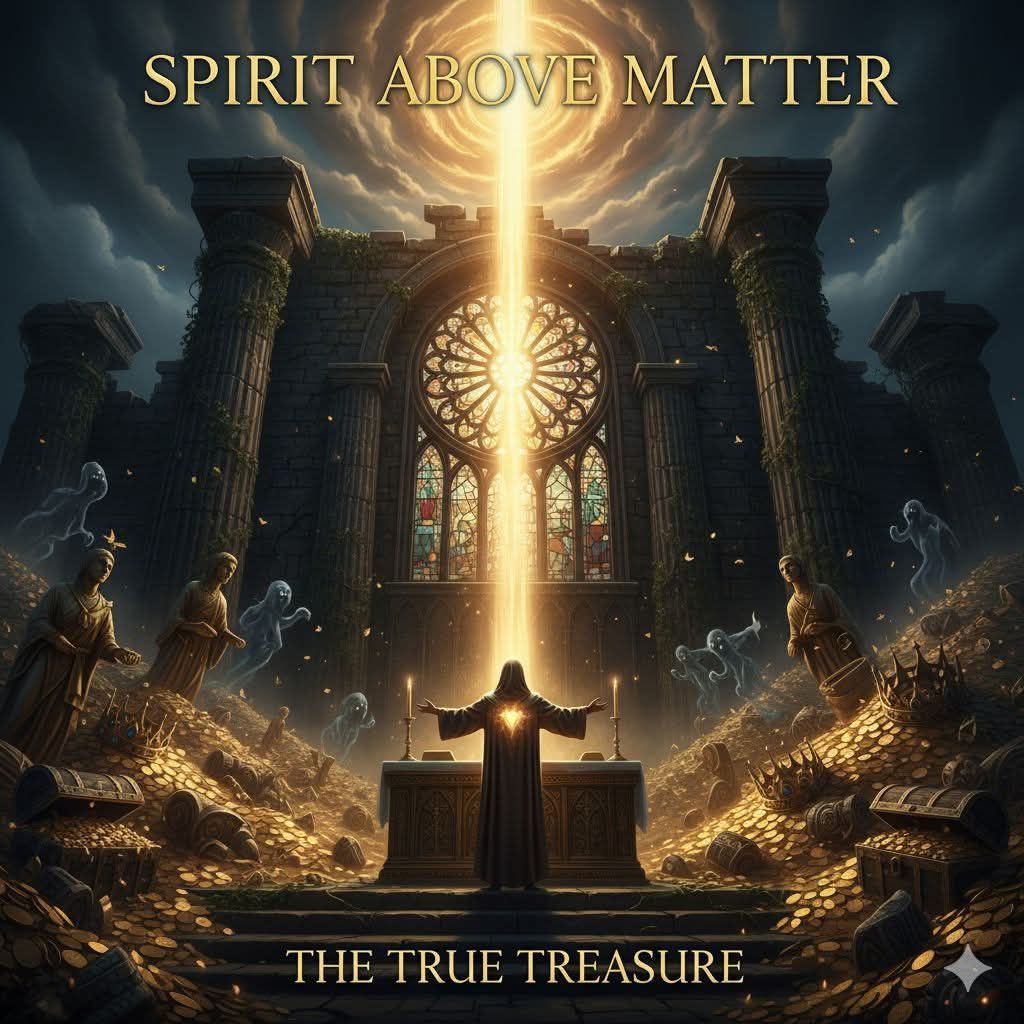
The treasures of the earth are dazzling—they glitter, they comfort, they promise safety. Wealth, possessions, titles, admiration—these things have their place in the human story. They make life more comfortable, yes, and they can be tools of good when used with wisdom. But when they become the object of worship, when they consume our vision and determine our worth, they cease to serve us and begin to enslave us.
To worship the material is to forget who the builder truly is. It is to mistake the bricks for the temple, the reflection for the light.
Christ taught, “What good will it be for someone to gain the whole world, yet forfeit their soul?” This is not merely a warning against greed; it is a statement about spiritual physics. Matter is bound by decay. Spirit is not. When consciousness clings to what fades, it inherits the same impermanence. When it anchors itself in the eternal, it partakes in eternity.
The material world is not evil—it is the stage upon which the divine drama unfolds. But the props must never upstage the purpose. Possessions are meant to be used in service to growth and goodness, not adored as idols. Wealth, beauty, status, and comfort are transient energies, useful in their time but unable to nourish the soul. When they become the goal, the spirit starves while the body feasts.
The Sufi mystics said that the world is a veil: alluring, soft, and dangerous if mistaken for the Beloved behind it. To see only the veil is to forget the Face that shines through it.
True spiritual vision requires inversion of values. Matter must serve spirit, not command it. When the soul governs, material blessings become tools of expression—art, generosity, creation, community. When matter governs, the same tools become weapons of vanity, envy, and division.
Lao Tzu hinted at this balance when he wrote: “He who knows he has enough is rich.” To know sufficiency is to break the spell of hunger that drives endless consumption. The heart at peace is wealth that cannot be taxed.
The material life can support the spiritual path when approached as stewardship rather than ownership. The farmer does not own the soil; he tends it. The mystic does not own wisdom; he channels it. So too must we hold our possessions lightly, aware that all things are lent to us for a time, to be used for good and then released.
In Hermetic philosophy, matter is viewed as spirit condensed. It is divine energy slowed to solidity, existing not as the opposite of God but as His manifestation in form. The danger lies not in matter itself but in the illusion that it is ultimate. When the student sees beyond the form to the essence, they rediscover God shimmering beneath all things.
Therefore, to worship matter is to stop at the surface; to worship Spirit is to see through it.
The treasures of the earth will always tempt the seeker. They are glittering mirages, testing whether we can enjoy without attachment, use without enslavement, and possess without pride. The true path is mastery through detachment—not rejection of the world, but transcendence of its power over the heart.
For the heart is the altar. Whatever is placed upon it becomes the god it serves. If gold sits there, the soul will rust with it. If God sits there, everything else becomes gold.
So let us walk the path with open hands. Let us enjoy the beauty of the world, use its tools for creation and compassion, but remember always that the real treasure is within. The light lit in the name of God cannot be bought, stolen, or lost. It is the only wealth that survives death.
Spirit must lead; matter must follow.
When this order is kept, the temple stands. When it is reversed, the house falls to dust.
 Apostolic Pentecostal Network
You must be logged in to post a comment.