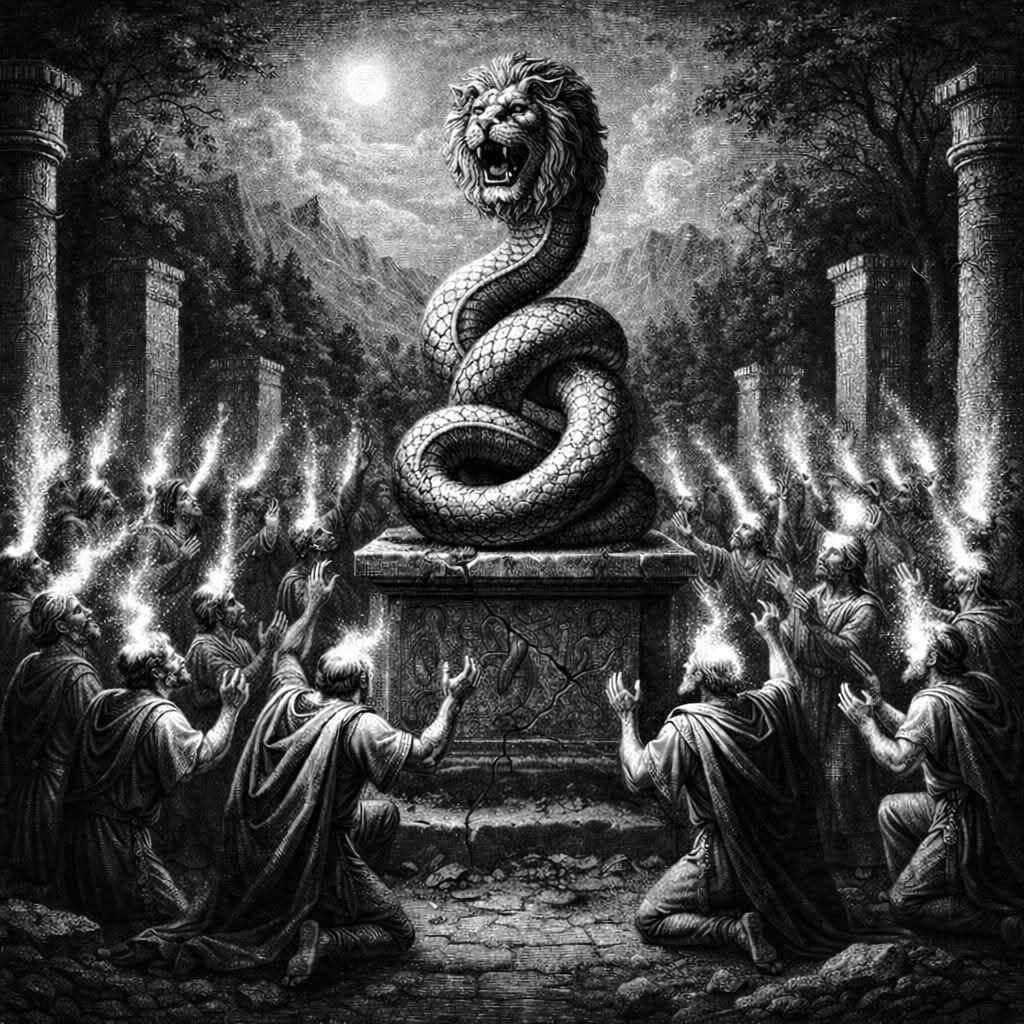
YHWH: WHY ANCIENT AUTHORS CALLED HIM THE DEMIURGE…
This is not a modern insult and it is not internet rebellion theology. It is a precise philosophical accusation made by ancient authors who were trained in metaphysics, cosmology, and inner initiation. When certain books call YHWH the Demiurge, they are not denying divinity. They are identifying function, limitation, and level of consciousness within the hierarchy of reality.
The first reason appears in the earliest Gnostic writings. In the Apocryphon of John, the Demiurge openly declares that he is the only God and that no other exists above him. Gnostic authors saw this statement as a confession, not a truth. The Absolute does not need to declare itself supreme. Infinity does not announce authority. Only a finite intelligence asserts exclusivity. For them, this single claim was enough to expose limitation.
The second reason is the method of governance. YHWH governs through law, commandment, covenant, punishment, and reward. Gnostic authors believed law is the language of structure, not spirit. Law regulates behavior but does not awaken consciousness. A being that rules through rules is an architect of order, not a revealer of inner knowing. The Demiurge is defined precisely as an organizer of systems, not a liberator of souls.
The third reason is ignorance of a higher source. In Gnostic cosmology, the Demiurge creates without awareness of the Pleroma, the fullness of divine reality above him. Authors observed that YHWH never references a source beyond himself in early scripture. This mirrors the Demiurge described throughout the Nag Hammadi Library, a creator who believes he is supreme because he has never encountered what transcends him.
The fourth reason is the nature of the world produced. Gnostic thinkers judged divinity by its fruits. A cosmos ruled by decay, blood sacrifice, inherited guilt, violence, and endless repetition was not seen as the work of the highest God. The Demiurge does not create from divine fullness but shapes pre existing matter. Adam is formed from dust, not light. This distinction mattered deeply to ancient initiates.
The fifth reason is emotional attribution. Statements of jealousy, wrath, vengeance, and regret disturbed esoteric philosophers. The Absolute lacks nothing and therefore desires nothing. Jealousy implies insecurity. Wrath implies imbalance. These traits aligned with a ruler protecting territory, not an infinite source radiating being. For Gnostic authors, these were psychological fingerprints of a lesser god.
The sixth reason is hierarchical enforcement. The Demiurge rules through intermediaries. Archons, angels of judgment, and powers of fate enforce order, time, and destiny. Gnostic writers saw parallels between Archons and the executing forces found throughout Hebrew scripture. Layered control is a hallmark of Demiurgic rule. The True Source does not govern through enforcers. It awakens directly.
The seventh and most dangerous reason is the path to salvation. In Gnosticism, liberation comes through knowledge, remembrance, and awakening of the divine spark within. In the system of YHWH, salvation comes through obedience, covenant membership, and ritual alignment. The Demiurge governs collectives through identity. The True God awakens individuals through inner sight.
Even later mystical traditions quietly acknowledged this tension. Early Kabbalistic thought places YHWH within a structure of emanations rather than at the absolute summit. Judgment and law are necessary forces, but they are not ultimate reality. What lies beyond names cannot be commanded, only known.
This is why authors made the distinction. They were not attacking God. They were mapping consciousness. The Demiurge is the ruler of form, time, law, and identity. The Absolute is beyond form, beyond law, beyond fear.
The Demiurge governs the world as it is.
The True Source awakens the soul beyond it.
That is why the name was given.
 Apostolic Pentecostal Network
You must be logged in to post a comment.