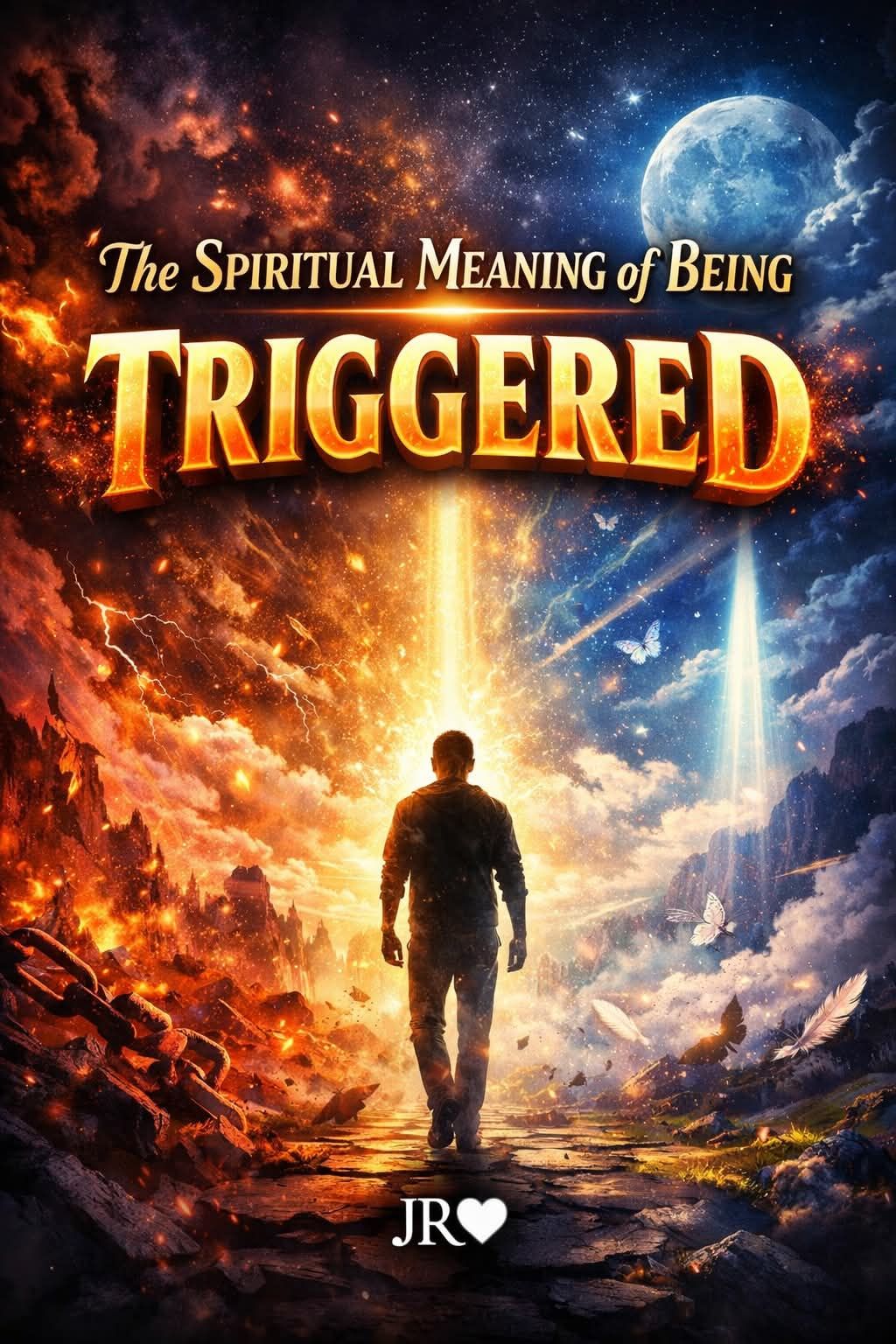
Why “Overreacting” Is Usually an Unfinished Contract Asking for Completion
If a small comment can hijack your whole nervous system… that’s not weakness. That’s history.
A trigger isn’t just an emotion.
It’s a memory pattern activating inside the body.
And spiritually, it’s one of the most honest signals you can receive—because it points to the exact place where you’re still living by an old agreement.
Not an agreement you signed with ink…
An agreement you signed with survival.
The Hidden Contract Behind Every Trigger
Most people think triggers mean:
“Someone disrespected me.”
“Someone hurt me.”
“Someone crossed a line.”
But the deeper truth is:
A trigger is what happens when the present touches an unhealed contract from the past.
A contract is a subconscious vow like:
“I must protect myself or I’ll be harmed.”
“If I’m not perfect, I’ll be rejected.”
“If I relax, I’ll be abandoned.”
“If I speak my truth, I’ll lose love.”
“If I don’t perform, I won’t matter.”
These contracts were formed when you were trying to survive emotionally.
They worked then.
But now they run you… even when you don’t need them.
When I’m Triggered, It Usually Means…
Here are three of the most common “core contracts” underneath triggers:
1) Abandonment
What it feels like: panic, clinging, withdrawal, numbness, testing people
What the contract says: “I’m about to be left. I’m not safe to relax.”
What your system does: attaches harder or detaches first so it doesn’t hurt.
2) Disrespect
What it feels like: anger, defensiveness, the urge to correct or prove
What the contract says: “If I don’t fight back, I’ll be powerless.”
What your system does: escalates, controls, or tries to “win” to restore worth.
3) Not Seen
What it feels like: sadness, shame, overexplaining, collapsing
What the contract says: “My needs don’t matter. I’m invisible.”
What your system does: performs for validation or shuts down in resignation.
This is why triggers feel so big:
You’re not reacting to what happened.
You’re reacting to what your body believes it means.
The Two Selves Inside the Trigger
Every trigger contains a split:
The Protector: the part that learned how to survive (fight, freeze, please, perform, control).
The Wounded One: the part that never got safety, attunement, respect, or understanding.
Most people live from the protector.
Healing begins when you can feel the protector… without obeying it.
Because the protector isn’t trying to ruin your life.
It’s trying to prevent a repeat of an old pain.
The Completion Moment Most People Miss
Here’s the spiritual initiation inside the trigger:
The trigger is asking you to stop repeating the contract.
Not by becoming numb.
Not by “being above it.”
But by choosing a new agreement in the exact moment the old one activates.
Completion sounds like:
“I can feel this without becoming it.”
“I don’t have to abandon myself to keep connection.”
“I can set a boundary without rage.”
“I can speak truth without proving my worth.”
“I can stay present even if they misunderstand me.”
When you do that, you don’t just calm down.
You break the loop.
A Simple Practice That Rewrites the Contract
Next time you’re triggered, try this:
Name the contract:
“This feels like abandonment / disrespect / not being seen.”
Name the protector:
“I want to attack, shut down, prove, control, or disappear.”
Name the core emotion underneath:
“What I actually feel is fear / shame / sadness.”
Choose the new agreement:
“I will not betray myself here.”
That one choice is how triggers become awakenings.
Closing
Your trigger is not proof you’re failing.
It’s proof you’re close to freedom—because the contract only rises when it’s ready to be completed. Every time you pause instead of react, you reclaim your power from the past. You stop asking the present to heal what happened back then. And you become someone who can feel deeply… without being controlled by what you feel.
What emotion shows up first for you—anger, fear, shame, or sadness?
I Am.
You Are.
We Are.
One Heart.
Infinite
 Apostolic Pentecostal Network
You must be logged in to post a comment.