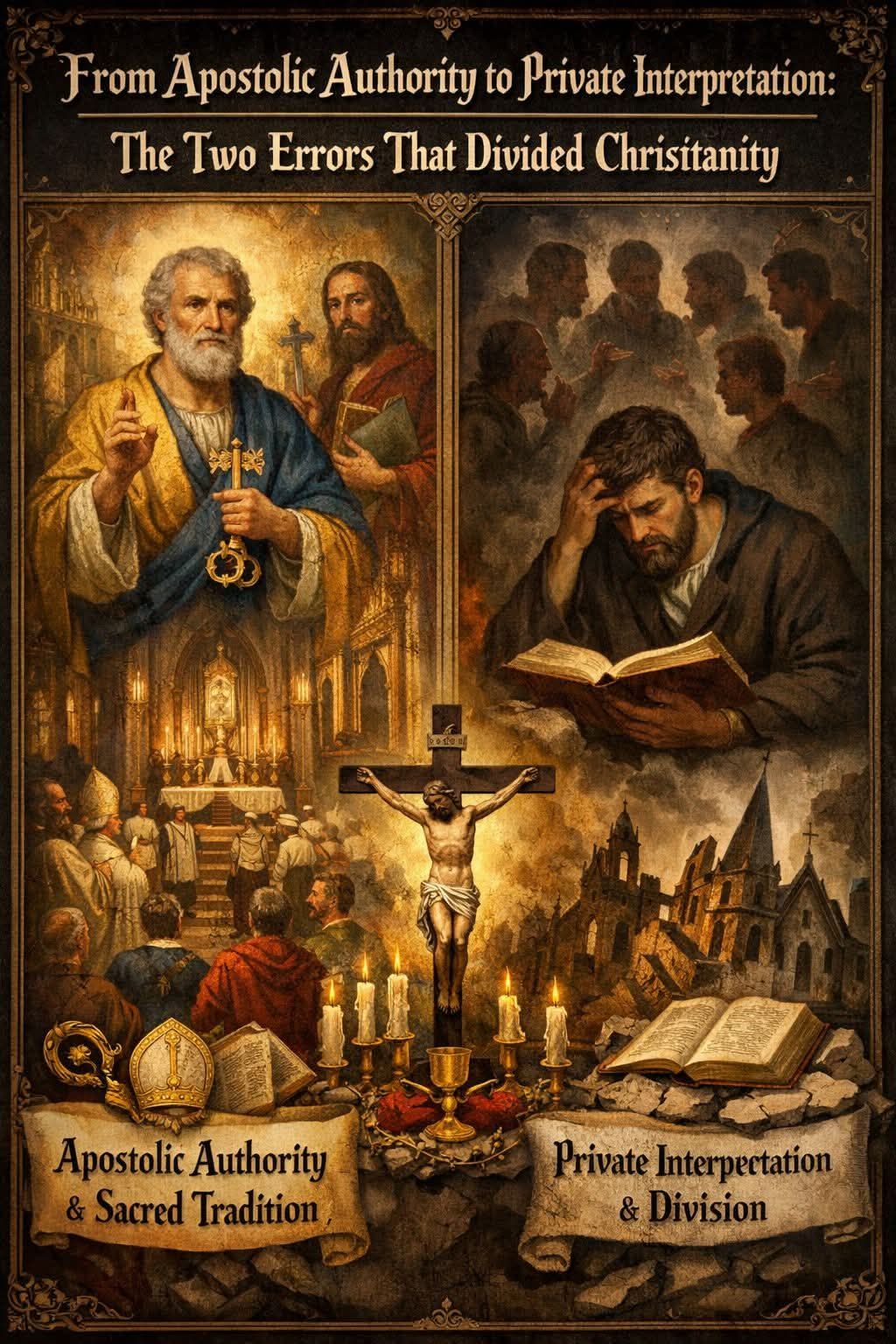
✝️ 𝗜𝗡𝗧𝗥𝗢𝗗𝗨𝗖𝗧𝗜𝗢𝗡
Christianity did not begin with private interpretation, nor with an individual reading Scripture apart from authority. It began with Jesus Christ, who founded one visible Church, entrusted His teaching authority to the Apostles, and promised divine assistance through the Holy Ghost.
Yet today, Christianity is fragmented into thousands of competing doctrines, each claiming biblical authority. This division did not come from Christ, nor from the Apostles, nor from the early Church. It is the direct fruit of two modern errors:
The rejection of Apostolic Authority
The denial of Sacred Tradition
𝗜. 𝗖𝗛𝗥𝗜𝗦𝗧 𝗘𝗦𝗧𝗔𝗕𝗟𝗜𝗦𝗛𝗘𝗗 𝗔𝗨𝗧𝗛𝗢𝗥𝗜𝗧𝗬 — 𝗡𝗢𝗧 𝗖𝗢𝗡𝗙𝗨𝗦𝗜𝗢𝗡
Our Lord did not write a book and leave it to future believers to interpret according to personal judgment. Instead, He taught, commissioned, and sent men with authority:
“As the Father hath sent Me, I also send you.” (John 20:21)
“He that heareth you, heareth Me.” (Luke 10:16)
Authority in the Church was not optional — it was essential. Christ placed His teaching power in living men, not in private readers centuries later.
This Apostolic Authority included:
The power to teach doctrine
The power to govern the Church
The power to sanctify through the Sacraments
Where this authority is accepted, unity remains. Where it is rejected, confusion multiplies.
𝗜𝗜. 𝗦𝗖𝗥𝗜𝗣𝗧𝗨𝗥𝗘 𝗪𝗔𝗦 𝗡𝗘𝗩𝗘𝗥 𝗠𝗘𝗔𝗡𝗧 𝗧𝗢 𝗦𝗧𝗔𝗡𝗗 𝗔𝗟𝗢𝗡𝗘
Sacred Scripture is the inspired Word of God — but it was never intended to function independently of the Church that preserved it.
The Bible did not fall from heaven complete. It was:
Written by members of the Church
Preserved by the Church
Canonized by the Church
Interpreted by the Church
Scripture itself warns against private interpretation:
“No prophecy of the scripture is made by private interpretation.” (2 Peter 1:20)
To separate Scripture from Apostolic Authority is to separate a body from its soul.
𝗜𝗜𝗜. 𝗦𝗔𝗖𝗥𝗘𝗗 𝗧𝗥𝗔𝗗𝗜𝗧𝗜𝗢𝗡: 𝗧𝗛𝗘 𝗟𝗜𝗩𝗜𝗡𝗚 𝗩𝗢𝗜𝗖𝗘 𝗢𝗙 𝗧𝗛𝗘 𝗔𝗣𝗢𝗦𝗧𝗟𝗘𝗦
Sacred Tradition is not man-made custom. It is the oral teaching of Christ and the Apostles, faithfully handed down and protected by the Church.
St. Paul commanded Christians:
“Stand fast; and hold the traditions which you have learned, whether by word or by our epistle.” (2 Thessalonians 2:15)
Notice:
Tradition is commanded
Tradition is binding
Tradition is equal in authority to written Scripture
To deny Sacred Tradition is to deny half of God’s revelation.
𝗜𝗩. 𝗧𝗛𝗘 𝗧𝗥𝗔𝗚𝗘𝗗𝗬 𝗢𝗙 𝗣𝗥𝗜𝗩𝗔𝗧𝗘 𝗜𝗡𝗧𝗘𝗥𝗣𝗥𝗘𝗧𝗔𝗧𝗜𝗢𝗡
Once Apostolic Authority is rejected and Tradition is denied, something must replace them.
What replaces them?
Private interpretation
Each individual becomes his own authority. Each opinion becomes a doctrine. Each disagreement becomes a new denomination.
This is why:
Thousands of denominations exist
Christians disagree on baptism, salvation, sacraments, and morality
Unity is impossible without authority
This chaos is not the work of the Holy Ghost.
“For God is not the author of confusion.” (1 Corinthians 14:33)
𝗩. 𝗙𝗔𝗜𝗧𝗛 𝗔𝗟𝗢𝗡𝗘 𝗔𝗡𝗗 𝗦𝗖𝗥𝗜𝗣𝗧𝗨𝗥𝗘 𝗔𝗟𝗢𝗡𝗘: 𝗧𝗛𝗘 𝗙𝗥𝗨𝗜𝗧 𝗢𝗙 𝗥𝗘𝗕𝗘𝗟𝗟𝗜𝗢𝗡
The doctrines of Sola Scriptura and Sola Fide did not exist in the Apostolic Church. They arose only after authority was rejected.
Faith without obedience replaces faith working through charity
Scripture without the Church replaces apostolic teaching
Opinion replaces doctrine
The result is spiritual instability and doctrinal anarchy.
𝗖𝗢𝗡𝗖𝗟𝗨𝗦𝗜𝗢𝗡: 𝗨𝗡𝗜𝗧𝗬 𝗥𝗘𝗤𝗨𝗜𝗥𝗘𝗦 𝗔𝗨𝗧𝗛𝗢𝗥𝗜𝗧𝗬
When Apostolic Authority is rejected, confusion multiplies.
When Sacred Tradition is denied, unity collapses.
Christ did not promise that His Church would be invisible, divided, or doctrinally contradictory. He promised it would be one, holy, catholic, and apostolic.
True unity is not found in personal interpretation —
it is found in submission to the Church Christ founded.
“𝙏𝙝𝙖𝙩 𝙩𝙝𝙚𝙮 𝙖𝙡𝙡 𝙢𝙖𝙮 𝙗𝙚 𝙤𝙣𝙚.”(John 17:21)
Authority preserves truth.
Tradition preserves unity.
Private interpretation destroys both.
 Apostolic Pentecostal Network
You must be logged in to post a comment.