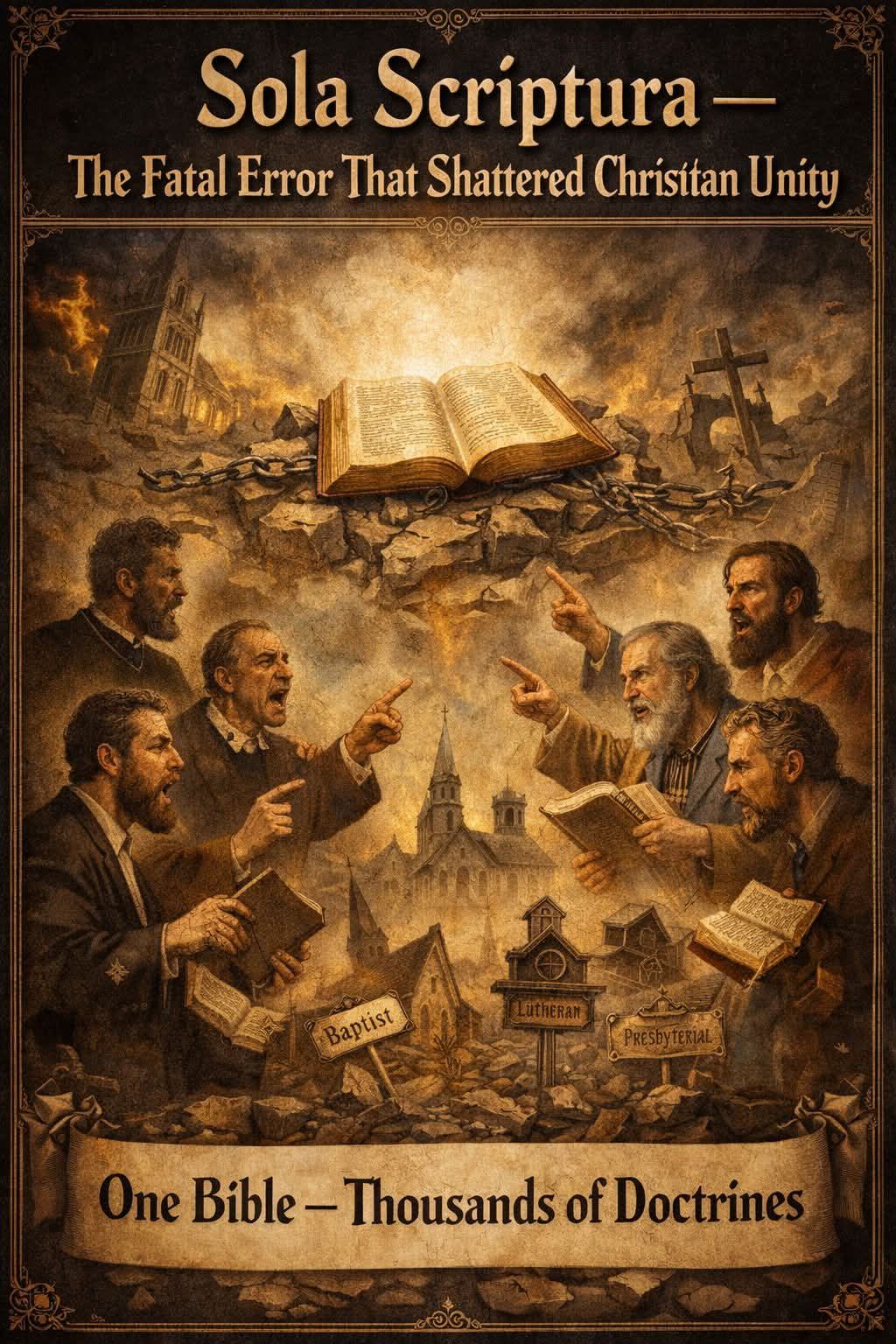
✝️ INTRODUCTION
Few doctrines have caused more confusion, division, and contradiction in Christianity than Sola Scriptura — the claim that the Bible alone is the Christian’s sole rule of faith.
At first glance, it sounds pious. Who would oppose Scripture?
But once examined honestly — biblically, historically, and logically — Sola Scriptura collapses under its own weight.
It is not biblical.
It is not apostolic.
It is not historical.
And worst of all, it guarantees division.
𝗜. 𝗧𝗛𝗘 𝗕𝗜𝗕𝗟𝗘 𝗡𝗘𝗩𝗘𝗥 𝗧𝗘𝗔𝗖𝗛𝗘𝗦 𝗦𝗢𝗟𝗔 𝗦𝗖𝗥𝗜𝗣𝗧𝗨𝗥𝗔
Nowhere in Sacred Scripture does God teach that the Bible alone is sufficient as the sole authority for Christian doctrine.
In fact, Scripture explicitly teaches the opposite:
“Stand fast; and hold the traditions which you have learned, whether by word or by our epistle.”
— 2 Thessalonians 2:15
St. Paul places oral Tradition and written Scripture on equal footing.
If Sola Scriptura were true:
Oral teaching would be unnecessary
Apostolic preaching would be temporary
Tradition would be condemned
Yet Scripture commands Tradition.
𝗜𝗜. 𝗧𝗛𝗘 𝗖𝗛𝗨𝗥𝗖𝗛 𝗘𝗫𝗜𝗦𝗧𝗘𝗗 𝗕𝗘𝗙𝗢𝗥𝗘 𝗧𝗛𝗘 𝗡𝗘𝗪 𝗧𝗘𝗦𝗧𝗔𝗠𝗘𝗡𝗧
The Church did not come from the Bible.
The Bible came from the Church.
Consider this fact carefully:
Christ founded the Church around A.D. 33
The New Testament was written gradually over decades
The biblical canon was formally recognized centuries later
For generations, Christians lived, worshiped, and died without a New Testament — yet they possessed the fullness of the Faith.
What guided them?
👉 Apostolic Authority
👉 Sacred Tradition
👉 Living teaching of the Church
Sola Scriptura would have been impossible for the early Christians.
𝗜𝗜𝗜. 𝗦𝗖𝗥𝗜𝗣𝗧𝗨𝗥𝗘 𝗪𝗔𝗥𝗡𝗦 𝗔𝗚𝗔𝗜𝗡𝗦𝗧 𝗣𝗥𝗜𝗩𝗔𝗧𝗘
𝗜𝗡𝗧𝗘𝗥𝗣𝗥𝗘𝗧𝗔𝗧𝗜𝗢𝗡
Ironically, the Bible itself condemns the very principle on which Sola Scriptura depends:
“No prophecy of the scripture is made by private interpretation.”
— 2 Peter 1:20
St. Peter does not say:
“Interpret according to your conscience”
“Interpret as the Spirit personally reveals to you”
Instead, he warns that Scripture is not self-interpreting.
Without authority, Scripture becomes a weapon — not a guide.
𝗜𝗩. 𝗦𝗢𝗟𝗔 𝗦𝗖𝗥𝗜𝗣𝗧𝗨𝗥𝗔 𝗖𝗥𝗘𝗔𝗧𝗘𝗦 𝗘𝗡𝗗𝗟𝗘𝗦𝗦 𝗗𝗘𝗡𝗢𝗠𝗜𝗡𝗔𝗧𝗜𝗢𝗡𝗦
If the Bible alone were sufficient:
There would be one doctrine
There would be one faith
There would be one Church
But reality tells a different story.
Under Sola Scriptura:
Baptism is debated
Salvation is redefined
Sacraments are denied
Moral teachings contradict each other
The result?
👉 Thousands of denominations
👉 Endless theological chaos
👉 No final authority to settle disputes
This is not unity.
This is doctrinal anarchy.
𝗩. 𝗪𝗛𝗢 𝗗𝗘𝗖𝗜𝗗𝗘𝗦 𝗪𝗛𝗔𝗧 𝗧𝗛𝗘 𝗕𝗜𝗕𝗟𝗘 𝗜𝗦?
Here is the unavoidable question Sola Scriptura cannot answer:
Which books belong in the Bible?
The Bible does not list its own table of contents.
It was the Catholic Church, through Apostolic Authority, that:
Discerned the inspired books
Rejected false writings
Preserved the true canon
To accept the Bible while rejecting the Church that gave it to you is historically incoherent.
You cannot logically say:
“I accept Scripture alone — except for the authority that decided what Scripture is.”
𝗖𝗢𝗡𝗖𝗟𝗨𝗦𝗜𝗢𝗡: 𝗦𝗖𝗥𝗜𝗣𝗧𝗨𝗥𝗘 𝗡𝗘𝗘𝗗𝗦 𝗧𝗛𝗘 𝗖𝗛𝗨𝗥𝗖𝗛
Sacred Scripture is holy, inspired, and authoritative —
but it was never meant to stand alone.
When Scripture is separated from:
Apostolic Authority
Sacred Tradition
The living teaching Church
It becomes a book of competing opinions rather than a source of unity.
“𝙁𝙤𝙧 𝙂𝙤𝙙 𝙞𝙨 𝙣𝙤𝙩 𝙩𝙝𝙚 𝙖𝙪𝙩𝙝𝙤𝙧 𝙤𝙛 𝙘𝙤𝙣𝙛𝙪𝙨𝙞𝙤𝙣.”
— 1 Corinthians 14:33
Confusion is not a mystery.
It is the fruit of rejecting authority.
The Bible did not create the Church.
The Church preserved the Bible.
Separate the two — and truth fractures.
 Apostolic Pentecostal Network
You must be logged in to post a comment.