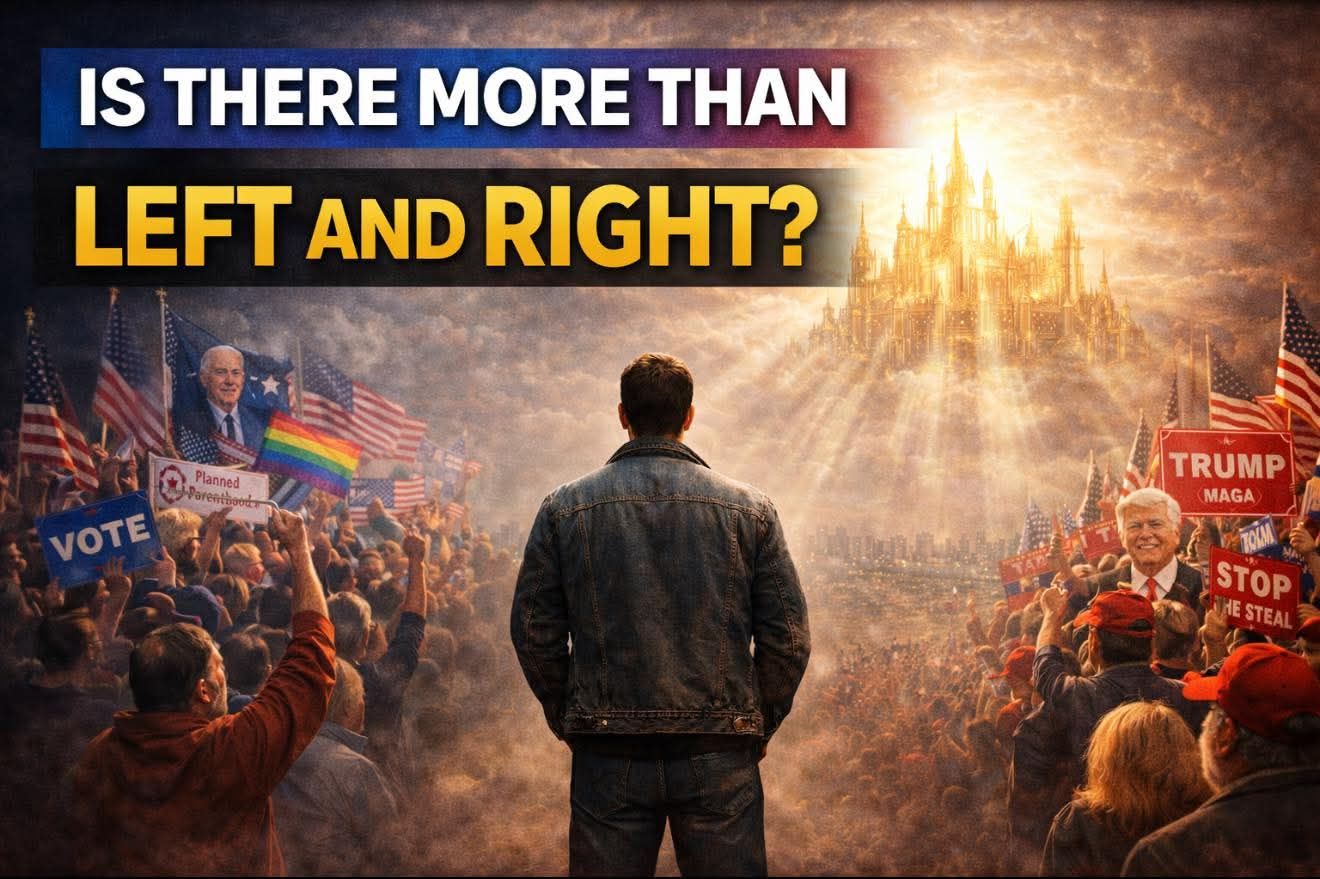
Over the past few weeks, I’ve been called a coward by both the left and the right for not “choosing a side.” I’ve been accused of third-wayism, of riding the fence. I’ve been called a puppet for the right who overlooks presidential immorality, and also a pastor compromised by leftist ideology.
These accusations come from both sides, each convinced that my refusal to fully align proves hidden loyalty to the other. That reveals the problem. We now live in an either-or world. You are either left or right. There is nothing in between.
The demand to choose sides exposes confusion about lordship.
The question is not left or right.
The question is who is lord.
Politics offers identity, belonging, purpose, and enemies.
Jesus offers a Kingdom.
The gospel declares a King who refuses to share His throne.
When politics becomes the highest good, disagreement becomes dangerous and loyalty becomes enforced. What follows is not moral courage, but conscience captured by ideology.
When politics becomes mixed with our faith, it begins to claim what belongs to God. It is treated as a savior, asked to deliver ultimate hope and meaning, and it demands total allegiance in return.
Scripture does not belong to the left or the right. When we force it into those categories, we distort it. From the beginning, Christianity was not an ideological alignment but a lived allegiance to Jesus as King—shaping engagement with every sphere of life without being owned by any of them.
Jesus’ disciples make this clear.
He intentionally gathered men who would never have chosen one another. Simon the Zealot believed Rome was corrupt and deserved violent overthrow. Matthew depended on Roman authority and believed cooperation was necessary for order and survival.
Outside of Jesus, these men would not have shared life together. Yet Jesus called them both—and refused to let either ideology become central. He trusted neither revolution nor empire. He announced a Kingdom that exposed the failures of both.
Jesus did not demand political agreement. He demanded allegiance. Their differences remained, but they were reordered under a higher authority. Neither Rome nor revolution was ultimate. Jesus was.
Politics still matter—but they are not supreme. Jesus confronted injustice without hatred, hypocrisy without violence, and power without coercion. He refused emperor worship and revolutionary bloodshed alike.
What some dismiss as third-wayism is simply refusing false lordship. This is not fence-sitting. It is obedience to a higher King.
Christians must be free to speak truth to all power. Abortion and sexual ideology, racism and cruelty, violence and hypocrisy must be confronted wherever they appear. If we can only critique the other side, our conscience no longer belongs to the Kingdom of God.
The world demands a side.
The gospel declares a throne.
Faithfulness is not choosing a camp.
It is choosing a King.
 Apostolic Pentecostal Network
You must be logged in to post a comment.